
Types of SEO: Technical, On-Page, Off-Page and Local Explained

There are four types of SEO, and they divide by what each one optimises: technical SEO (how your site is delivered), on-page SEO (what your pages say), off-page SEO (what other sites say about you) and local SEO (your listing and the places you serve).
You have probably already landed on a page claiming there are twelve. There are not twelve. Longer lists count several different things at once, and the first section below shows what.
After the four definitions, this guide draws the on-page and technical line that most explanations assert and never define, puts the four in working order, says how long each takes to report back, places answer engine optimisation relative to them, tells you what your platform already handles, and ends with the types you can leave alone.
How Many Types of SEO Are There?
There are four types of SEO: technical, on-page, off-page and local.
That answer disagrees with much of what you will read, and the disagreement has one cause. Pages giving you twelve types are not describing eight extra areas of work. They are mixing three classification axes into one list.

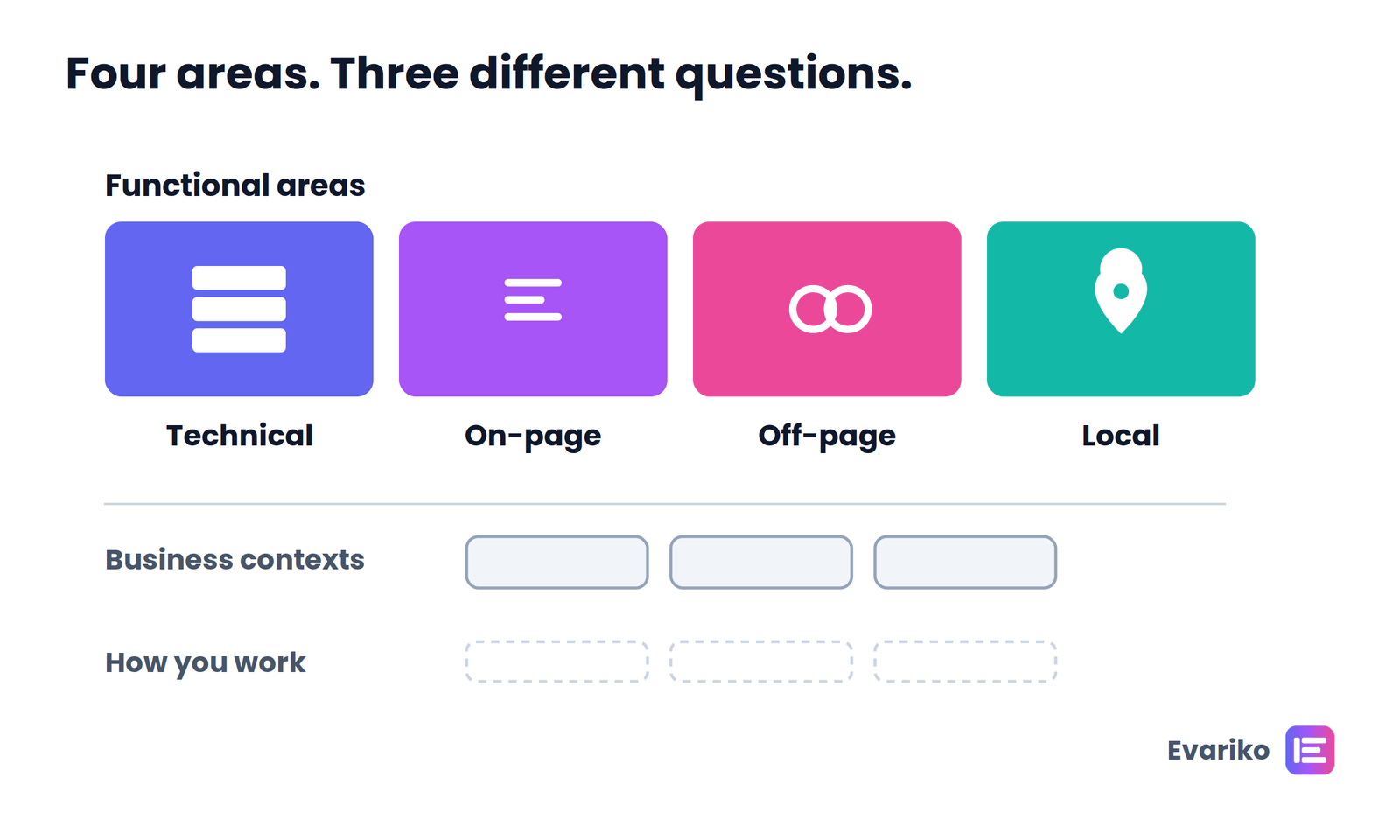
A functional area divides the work by what it optimises. There are four, and they are the subject of this guide.
A specialised application is a business context the four get applied in: ecommerce, international, enterprise.
An ethical posture describes how you work rather than what you work on, which is what white hat and black hat mean.
Those answer three different questions. A list running “on-page, off-page, technical, ecommerce, voice, white hat, negative” answers all three at once without saying so, which is why the count keeps moving. If you have met the phrase four pillars of SEO, it names the same four areas.
The table below sorts the terms you are likely to meet by which axis each classifies on, whether it is a real category or a sub-case, and who needs it.
| Term | Axis it classifies on | Real category or sub-case | Who needs it |
|---|---|---|---|
| Technical SEO | Functional: how the site is delivered | Real category | Every site |
| On-page SEO | Functional: what the page says | Real category | Every site |
| Off-page SEO | Functional: what other sites say | Real category | Every site |
| Local SEO | Functional: the listing and the places served | Real category | Premises or service area |
| Ecommerce SEO | Business context | Sub-case: the four, applied to a catalogue | Online retailers |
| International SEO | Business context | Sub-case: the four, applied across markets | Multi-market sites |
| Enterprise SEO | Business context (scale) | Sub-case | Large sites, many stakeholders |
| Content SEO | Function | Sub-case: mostly inside on-page | Every site, inside on-page |
| Image SEO, video SEO | Content format | Sub-case: split across on-page and technical | Image or video-led sites |
| Mobile SEO | Device class | Sub-case: folded into technical | Nobody, separately |
| Voice SEO | Input method | Sub-case: folded into search intent | Nobody, separately |
| White hat, black hat, grey hat | Ethical posture | Not a category of work | Nobody chooses a hat |
| Negative SEO | A third-party attack | Not a type of SEO | Nobody does it to themselves |
The Four Functional Areas
Each of the four is defined by what it optimises, so the four definitions share a shape.
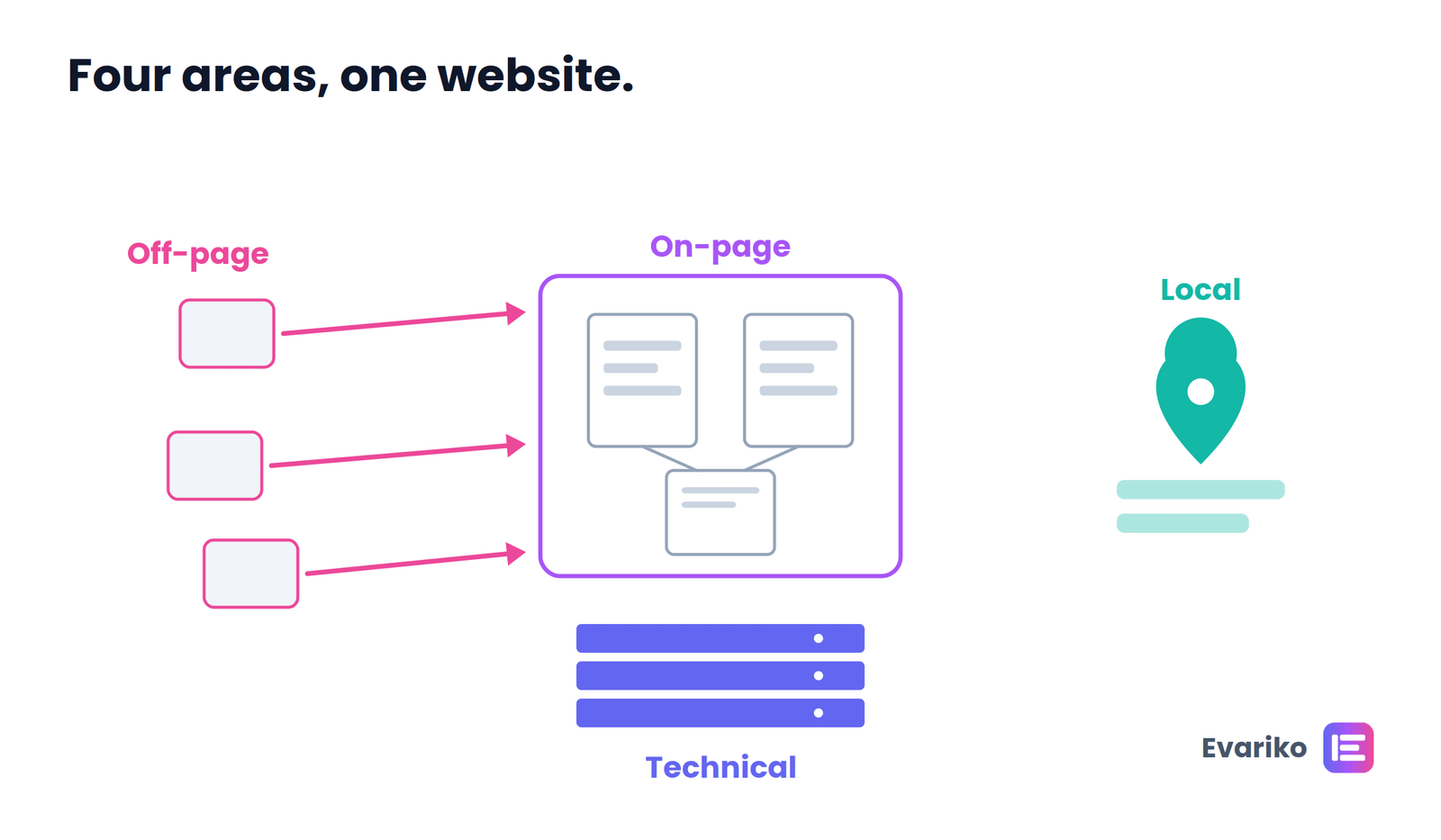
- Technical SEO optimises how your site is delivered, so pages can be reached and indexed.
- On-page SEO optimises what a page says, so it matches the right searches.
- Off-page SEO optimises what other sites say about you, so your pages are treated as credible.
- Local SEO optimises your listing and your location pages, so you appear in map results.
Why Some Lists Say Twelve
Longer lists mix classification axes, and the mixing follows a pattern.
A twelve-item list starts with the four functional areas, adds business contexts (ecommerce, international), then content formats (image, video), then a device class (mobile), then an input method (voice), then two or three ethical postures. Five axes, presented as one tier of siblings.
The cost is not academic. Believe mobile SEO is a separate area and you budget for something that has been part of technical SEO since mobile-first indexing finished. Everything else on a long list sits inside one of the four, describes the context you apply them in, or answers a different question.
If you want to learn more about SEO then we have this comprehensive guide for you What Is SEO? A Complete Guide for 2026.
What Is On-Page SEO?
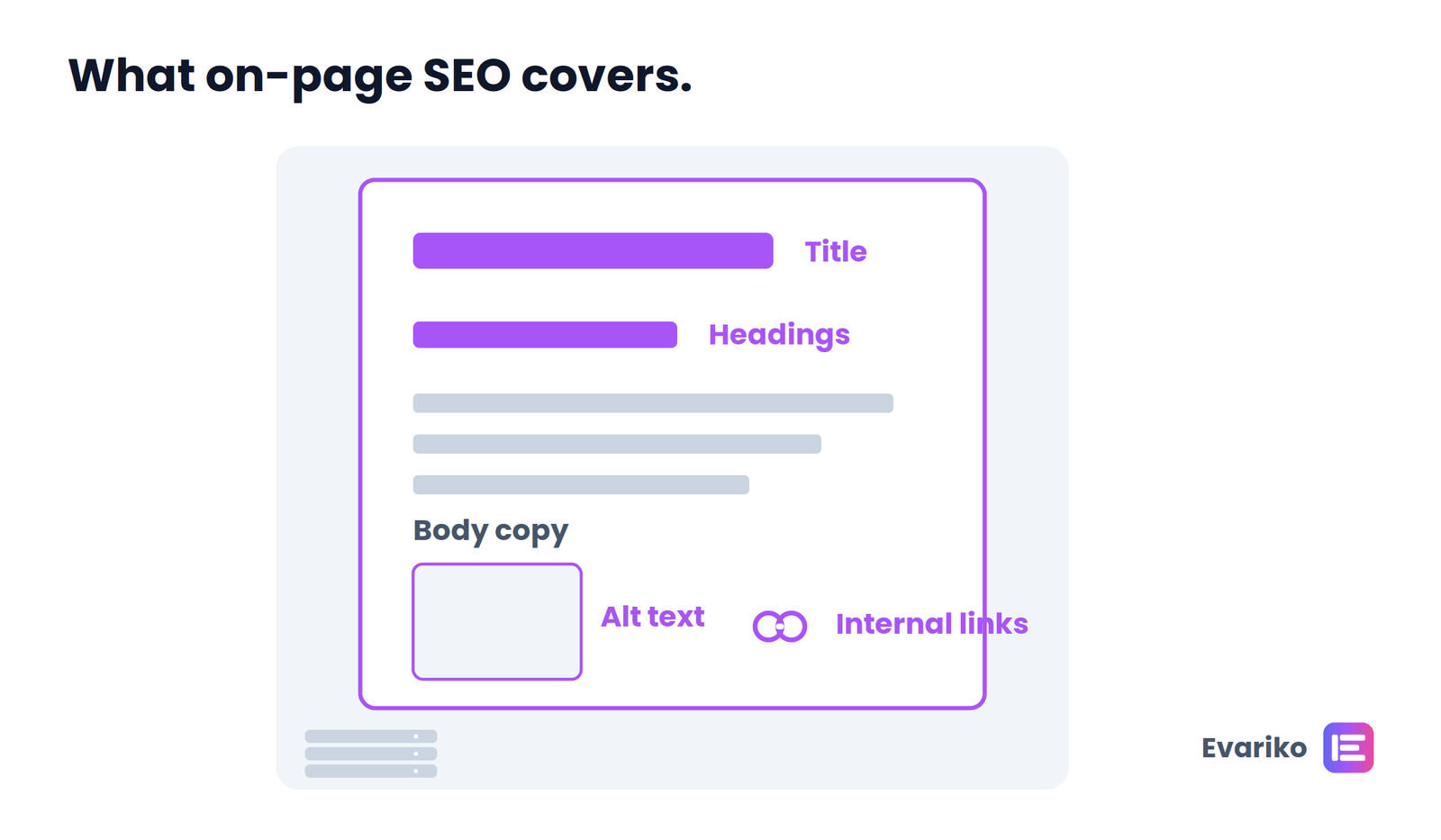
On-page SEO is the work you do on a page itself to make its subject and structure clear, so a search engine can match it to the right queries.
Tactics. Decide what each page is for, confirm there is real search demand behind that subject, and make sure no two of your pages compete for the same one.
Activities. Keyword research and search intent matching, then the title tag, the meta description, the heading hierarchy, the body copy, image alt text and the internal links inside the page.
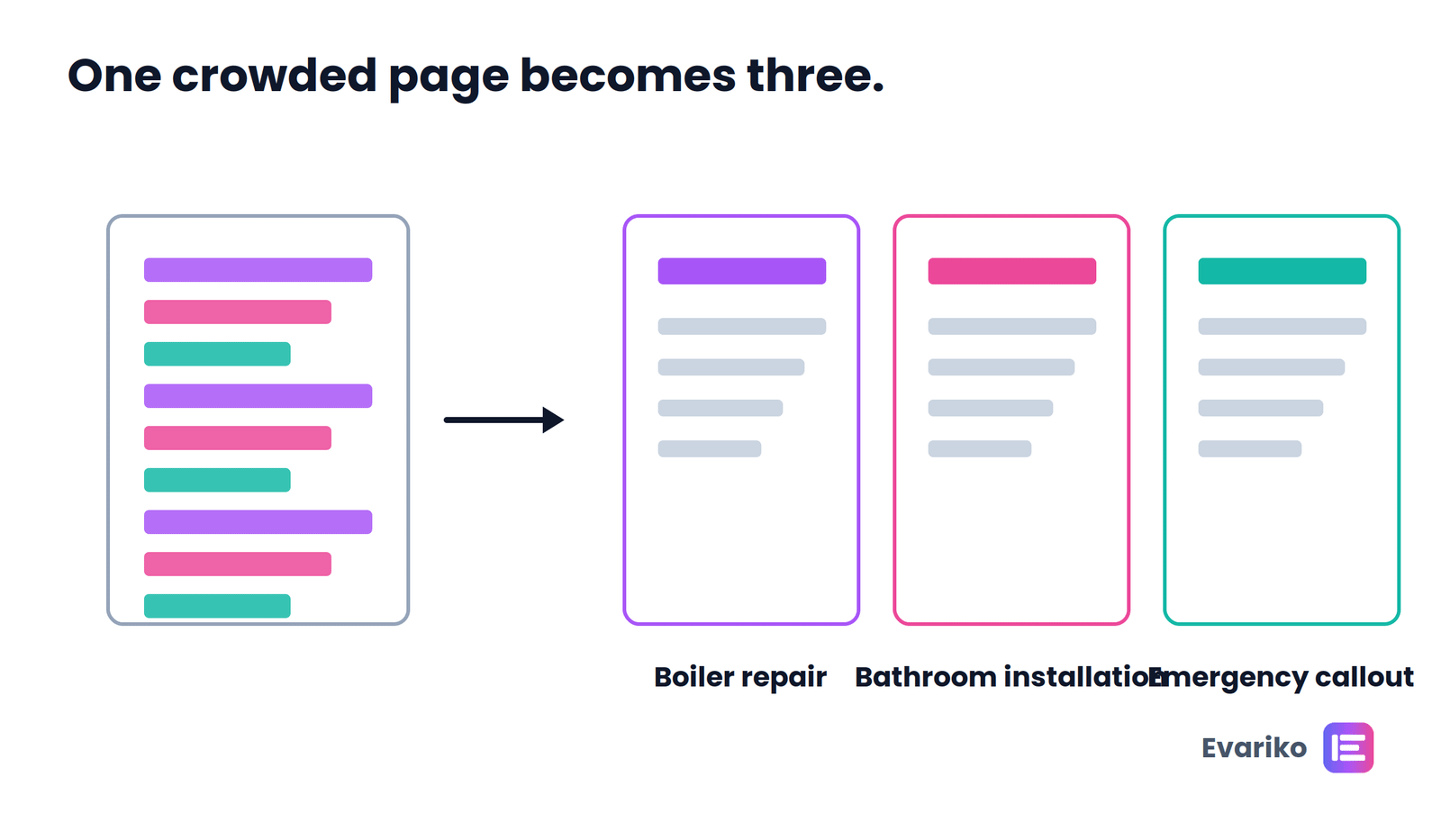
Example. A plumbing company with three vans covers one city and the towns around it. Its services page lists every trade in one block. Splitting that into boiler repair, bathroom installation and emergency callout is on-page work: each page gets one subject, one set of headings and one search intent to match.
Boundary. On-page SEO does not cover whether a page can be crawled or rendered. That belongs to technical SEO, because the criterion is what the page says, not whether it can be reached.
Content SEO sits inside on-page almost entirely, describing the same work from the writing end.
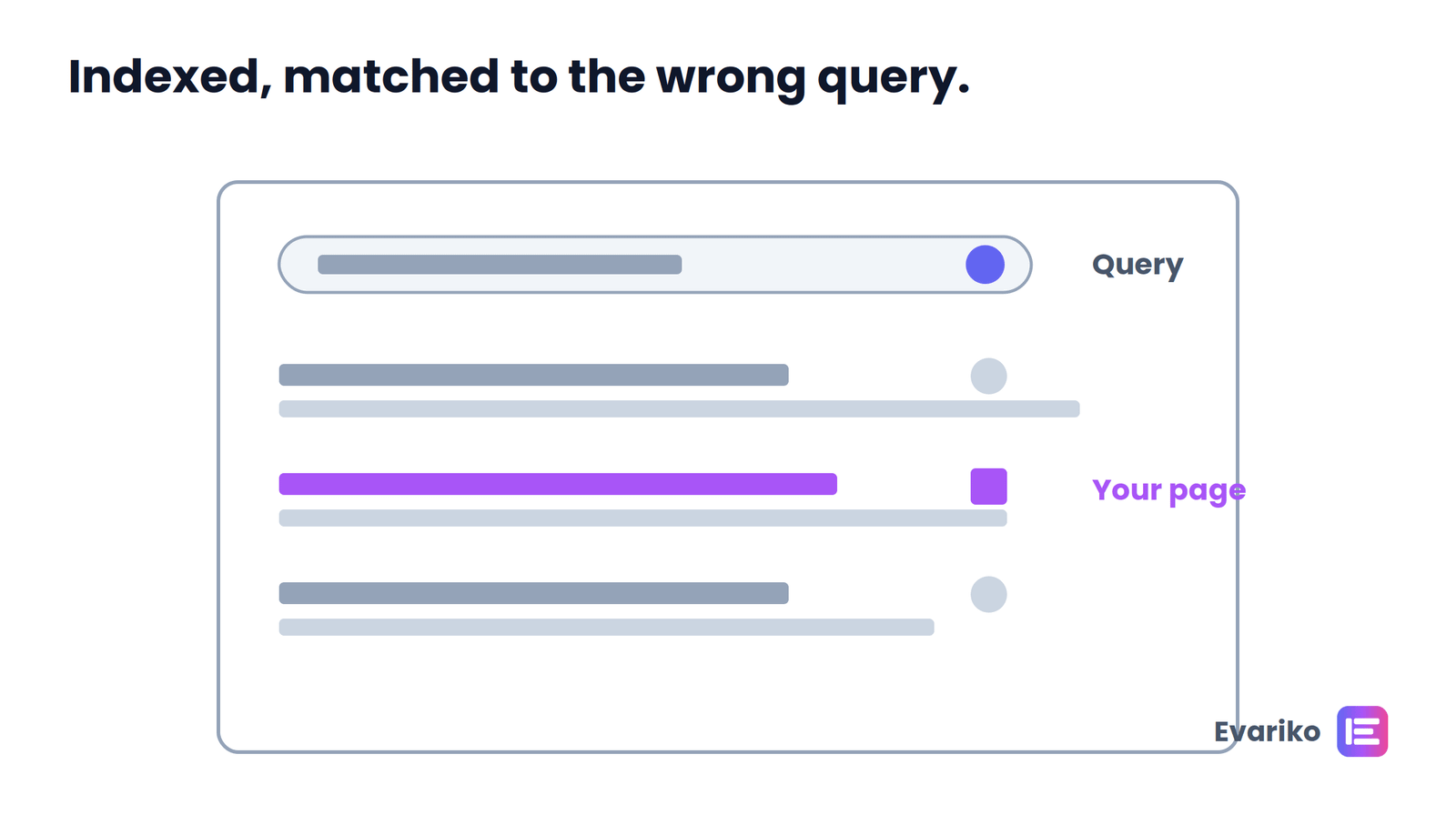
If your pages are indexed and ranking for the wrong queries, the problem is on-page SEO. The page is reachable and the subject is unclear.
For the element-by-element treatment, including which parts carry the most weight, see What Is On-Page SEO and Which Elements Carry the Most Weight.
What Is Off-Page SEO?
Off-page SEO is the work you do away from your own site to build the corroboration search engines read as other people rating you.
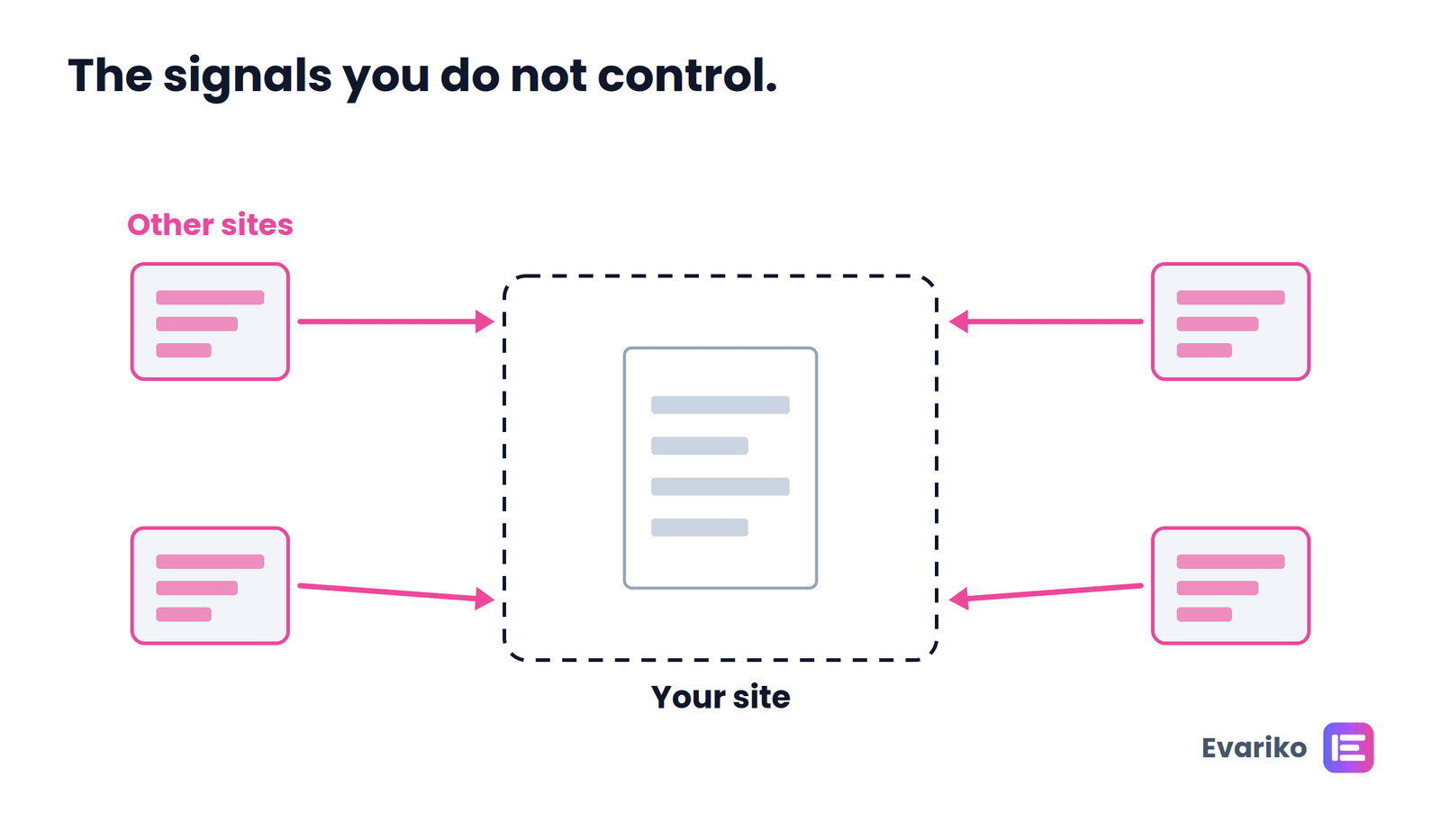
The difference between on-page and off-page SEO is who controls the signal. On-page work is what you change by editing your own page. Off-page work depends on somebody else deciding to mention you.
Tactics. Give other sites a real reason to reference you, and make sure the references point at the right pages.
Activities. Earning links from sites with genuine audiences, digital PR, being quoted as a source, and managing how your business is described elsewhere.
Example. The same plumbing company sponsors a junior football club and is named on the club’s site. A trade association lists it as an accredited member. A regional paper quotes its owner on frozen pipes. None of that happens on the company’s own site.
Boundary. Off-page SEO does not cover the links inside your own site. Those belong to technical SEO, because internal links are an architecture decision you control rather than a third-party signal you earn.
If you rank on page two for everything and page one for nothing, the problem is off-page SEO. Your pages are eligible and nothing is vouching for them.
Is Off-Page SEO Only About Backlinks?
No. Backlinks are the largest part of off-page SEO and not the whole of it.
Brand mentions without a link, consistent descriptions across directories, customer reviews, and being present where your category is discussed all sit in the same area.

They are harder to measure than links, which is why they get left out of the definition.
That share matters more now rather than less, because assistants generating answers draw on exactly this kind of third-party corroboration when deciding which sources to name. The AEO and GEO section below returns to it.
For which links still move rankings and which are waste, see What Is Link Building and Which Links Still Move Rankings.
What Is Technical SEO?
Technical SEO is the work you do on how a site is delivered, to make its pages reachable, renderable and indexable, so that everything else you do counts.
Tactics. Remove whatever stops a search engine reaching, rendering or indexing the pages you want found.
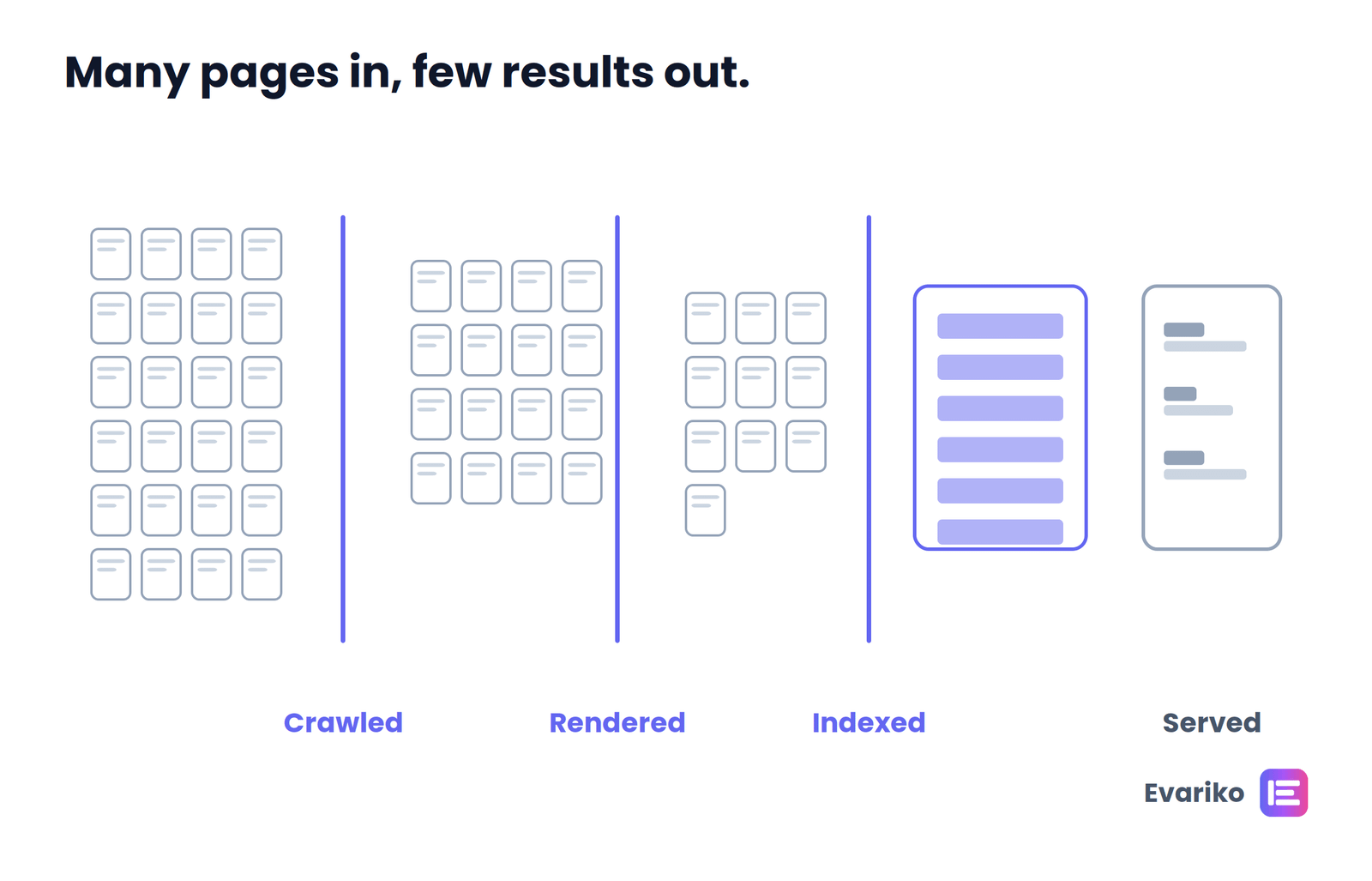
Activities. Crawl control, sitemaps, canonical tags, redirects, status codes, architecture, internal linking, rendering, Core Web Vitals, structured data.
Example. The plumbing company’s service pages were built on a staging site never set to be indexed, and the live versions inherited the setting. The copy is good and nothing is indexed, so nothing ranks.
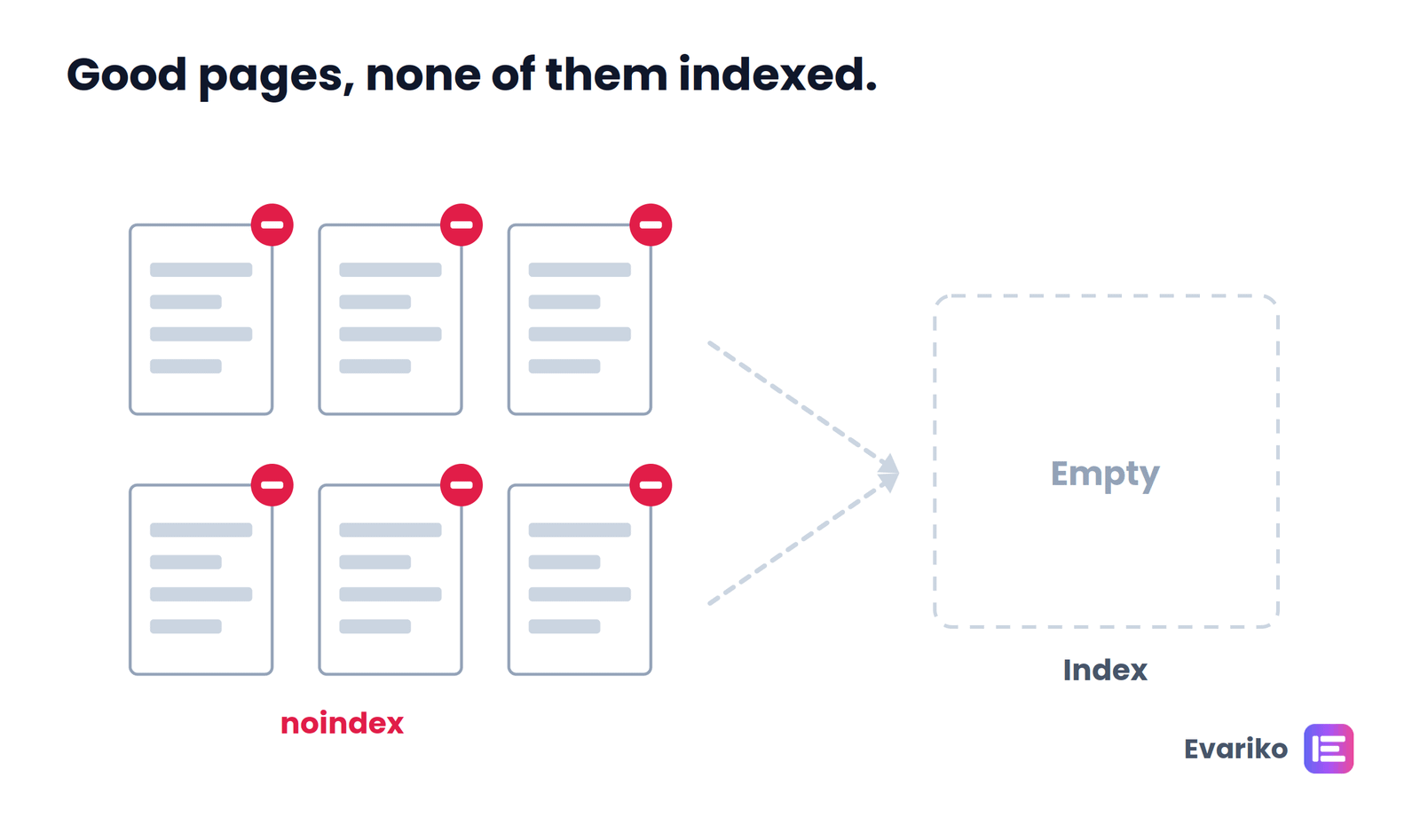
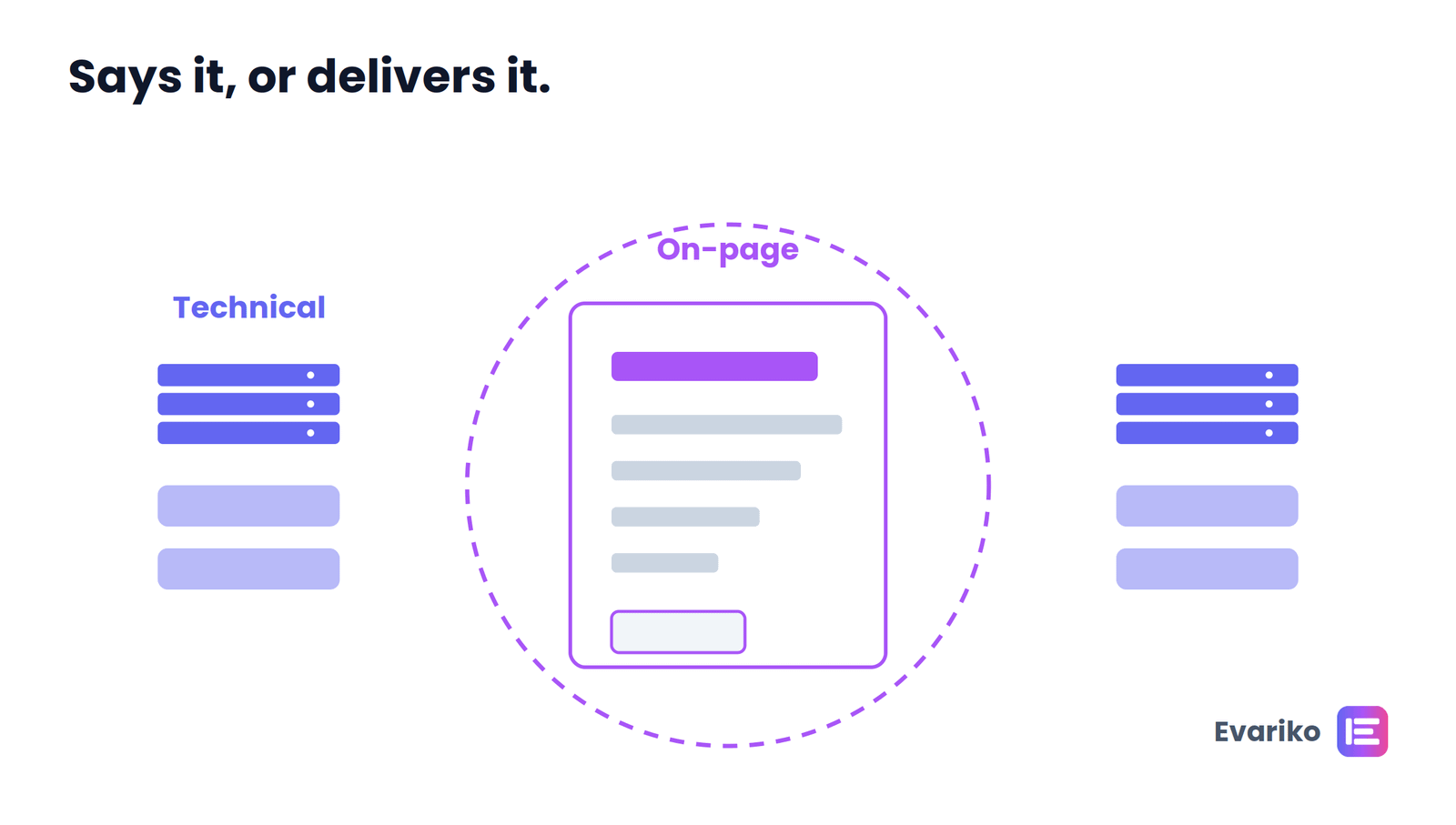
Boundary. Technical SEO does not cover what a page says. That belongs to on-page SEO, because technical SEO decides whether the page is available to be read at all.
If Search Console reports pages as discovered but not indexed, the problem is technical SEO.
The full treatment, including the problems only technical work can fix, is in Technical SEO 101: Complete Guide For 2026.
Is Technical SEO the Same as On-Page SEO?
No. On-page SEO concerns what a page says and how it is marked up. Technical SEO concerns whether the page can be reached, rendered and indexed at all.
That criterion settles the three cases every list files differently.
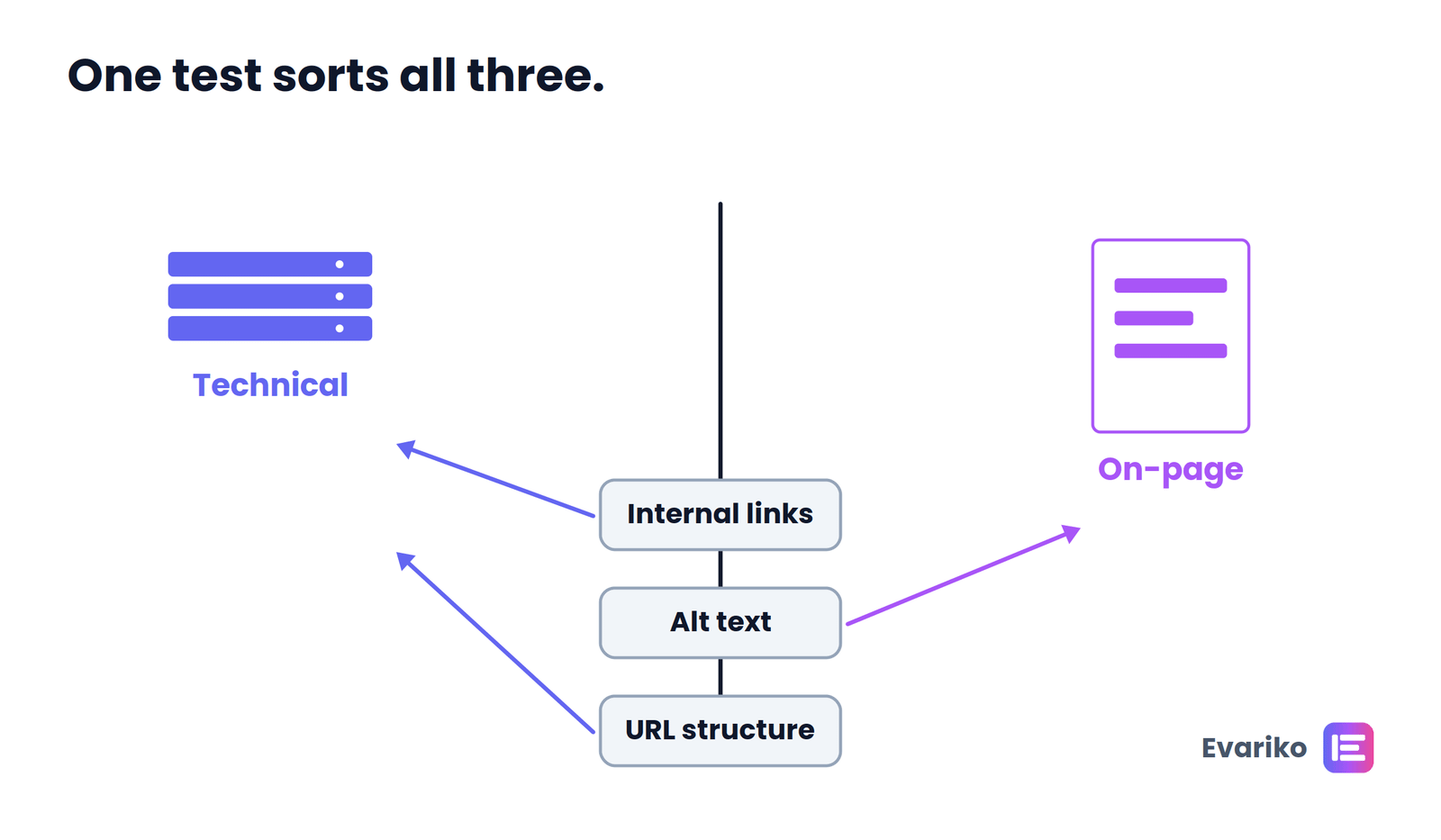
Internal linking is technical: it decides whether a crawler reaches a page and how much importance your structure assigns it, which is a reachability question.
Image alt text is on-page: it describes what is in the image to a screen reader and to a search engine, which is a meaning question.
URL structure is technical: a URL is an address, and changing one changes what resolves and what redirects.
Ask whether the thing decides what the page means or whether the page arrives.
What Is Local SEO and Who Needs It?
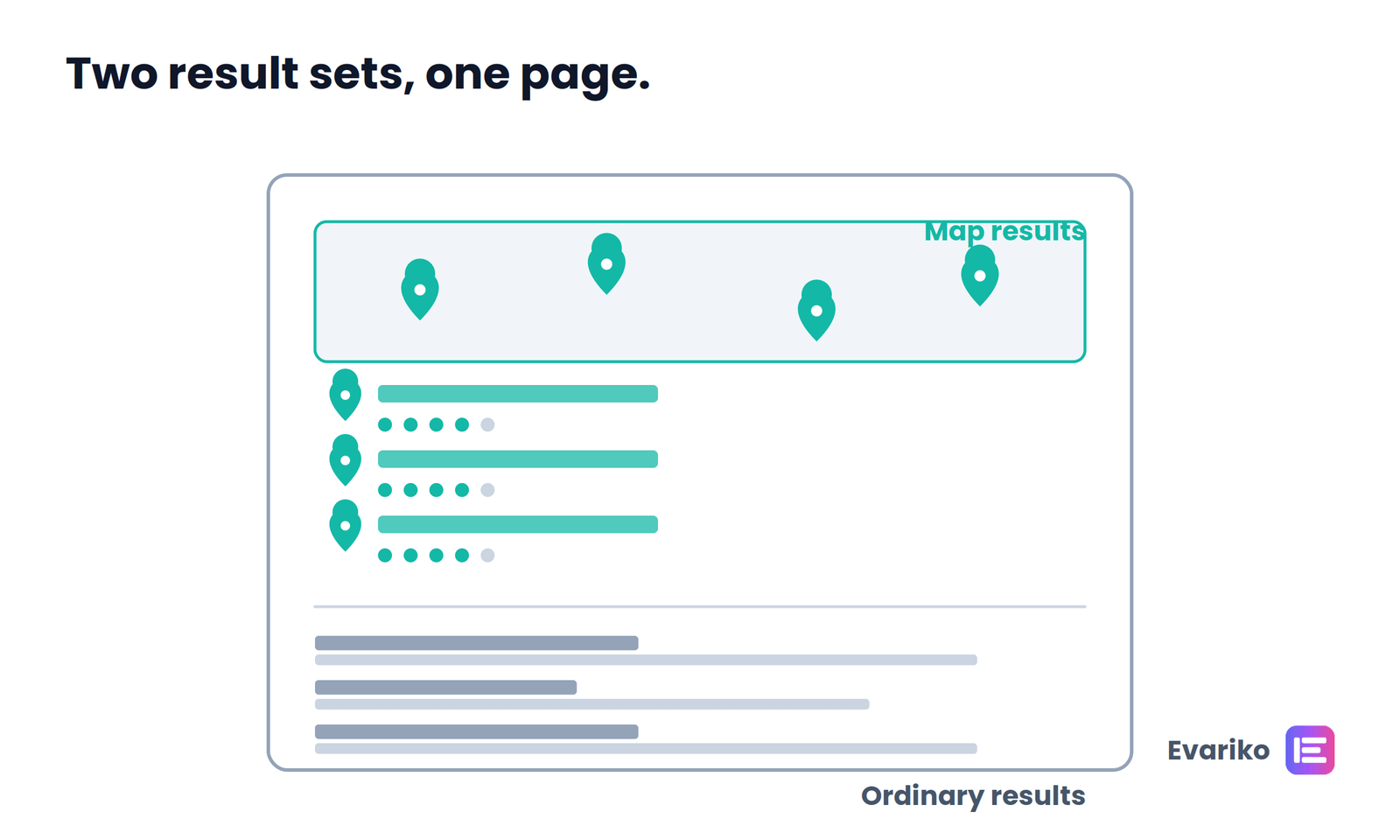
Local SEO is the work you do on your business listing and your location pages to appear in map results for the places you serve.
It is a fourth area rather than a sub-case, because the map results are ranked by inputs the other three never touch. You can hold position one in the ordinary results and be absent from the map above them.
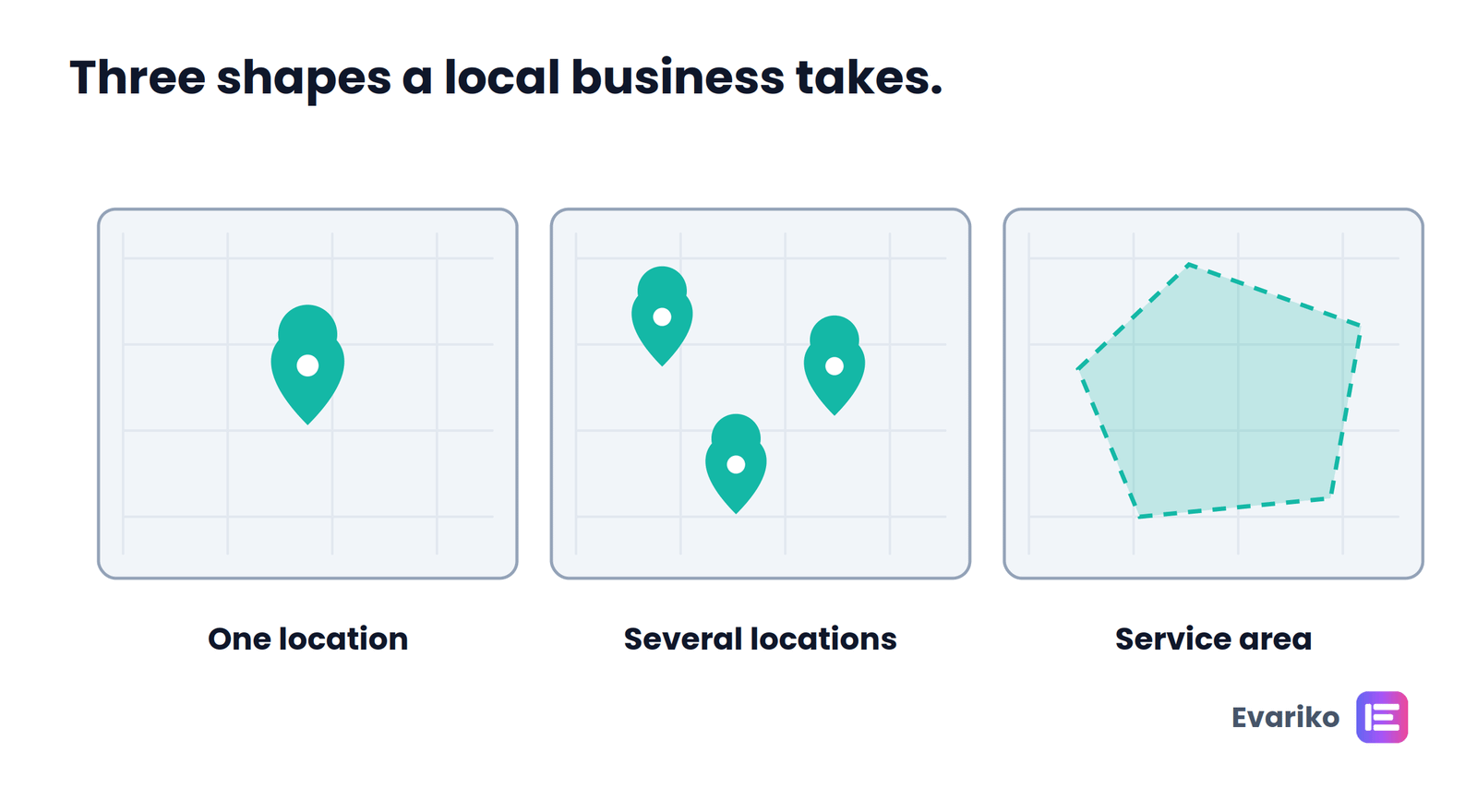
Who needs it. Any business customers come to, and any business that travels to customers, in one of three shapes: one location, several locations, or a service area with no premises.
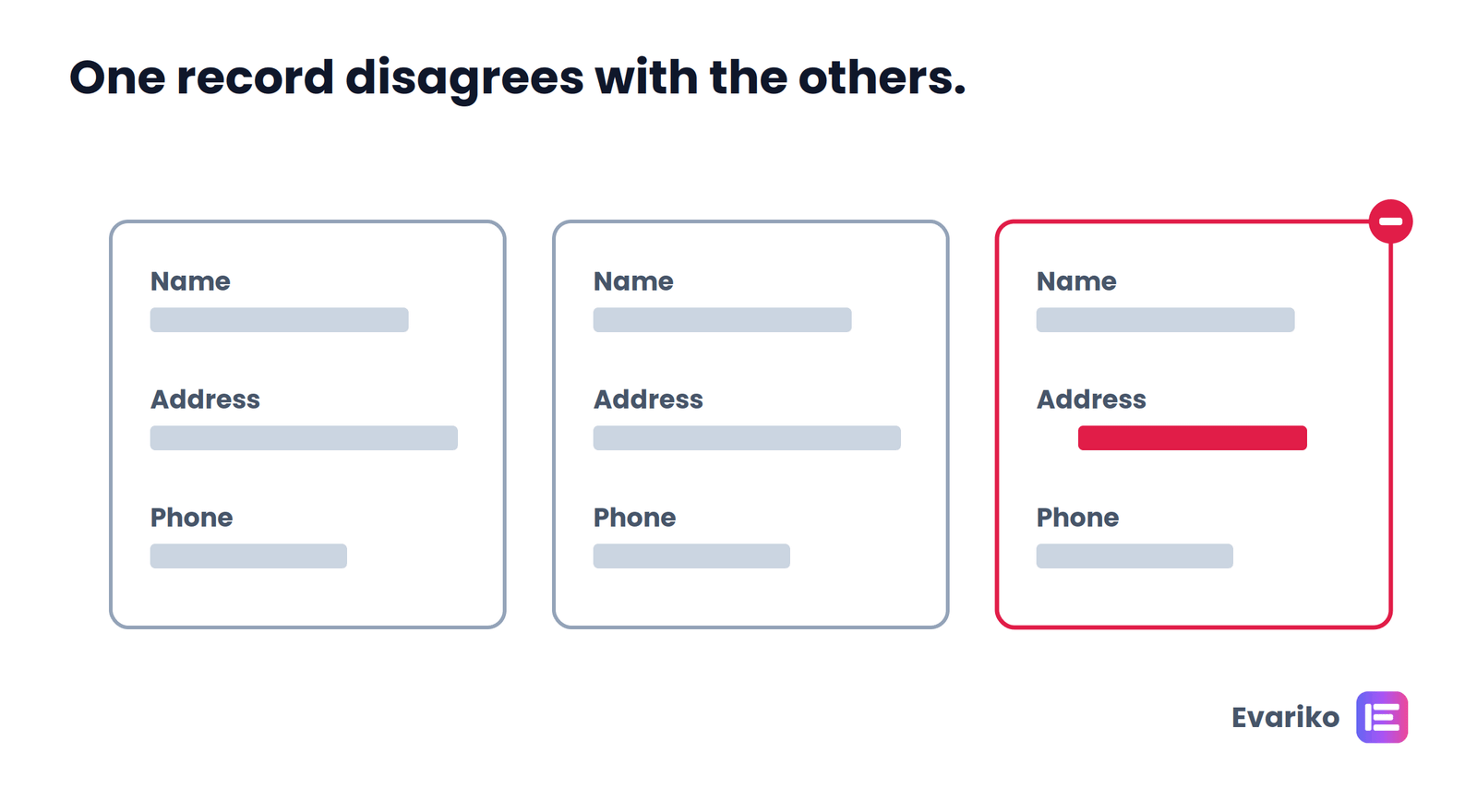
Tactics. Claim and complete the listing Google ranks, then make every other record of your business agree with it.
Activities. Google Business Profile setup and upkeep, NAP consistency across directories (name, address and phone number written identically everywhere), local citations, review signals, and location or service-area pages on your own site.
Example. The plumbing company has no shopfront. Its profile is set as a service area listing the towns it covers rather than placing a pin, its number is formatted identically on every directory, and it has a page per town describing the work it does there.
One rule decides a lot here: map reach is tied to where the business is verified, so a listing in one town does not appear in the map results of a distant one.
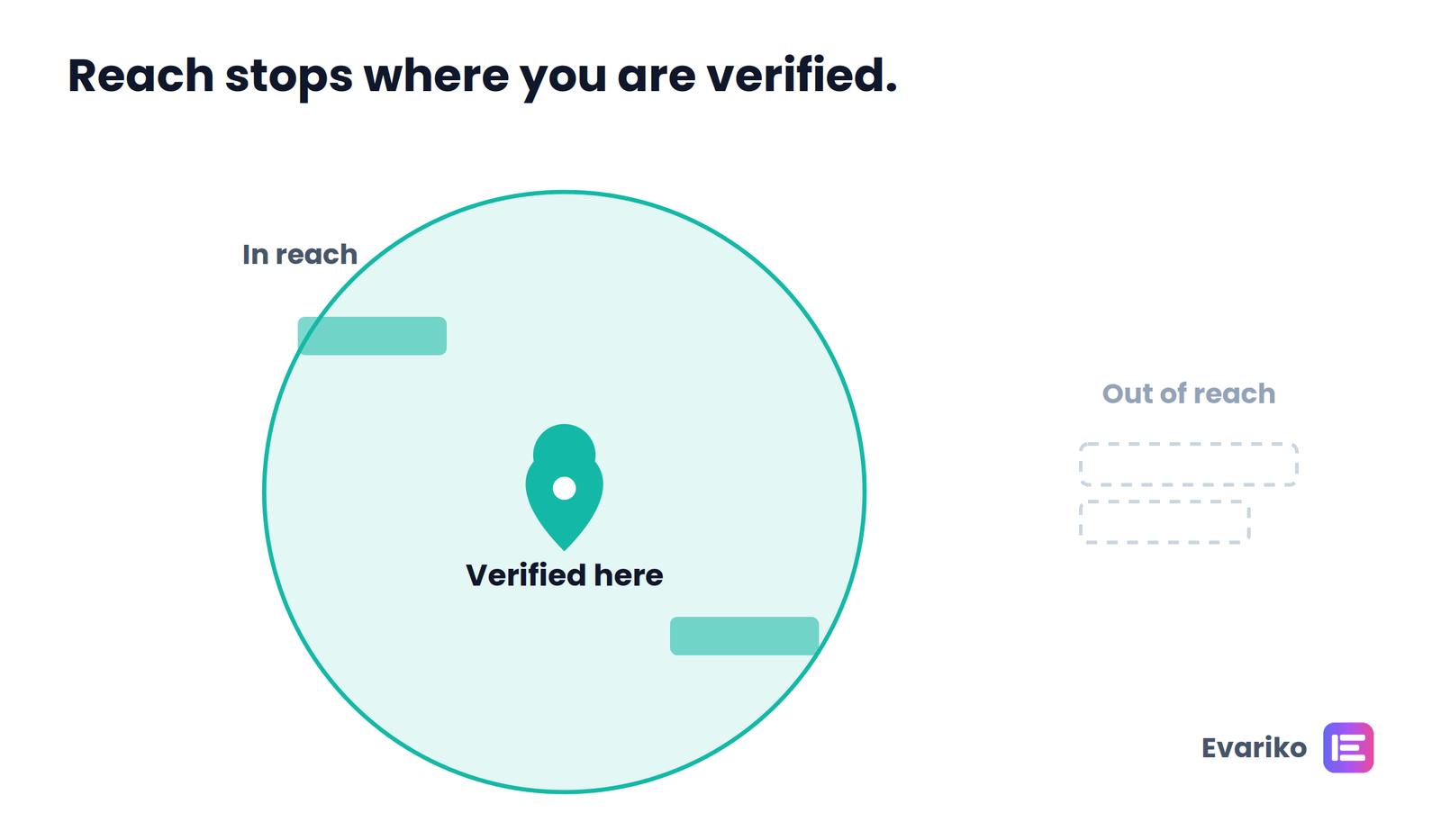
Service-area pages earn their place in the ordinary results instead.
Boundary. Local SEO does not cover ranking in the ordinary results underneath the map. That belongs to the other three, because the map pack and the blue links run on different inputs.
If you rank in the ordinary results but never appear in the map, the problem is local SEO. The mechanics in full are in What Is Local SEO and How the Local Pack Is Ranked.
How Google Ranks the Map Pack
Google ranks local results on three factors it publishes: relevance, distance and prominence. The map pack is the map plus the short list of businesses that appears above the ordinary results for a search with local intent.
Relevance is how well a Business Profile matches what someone searched for, which is why complete business information is the first thing to fix.
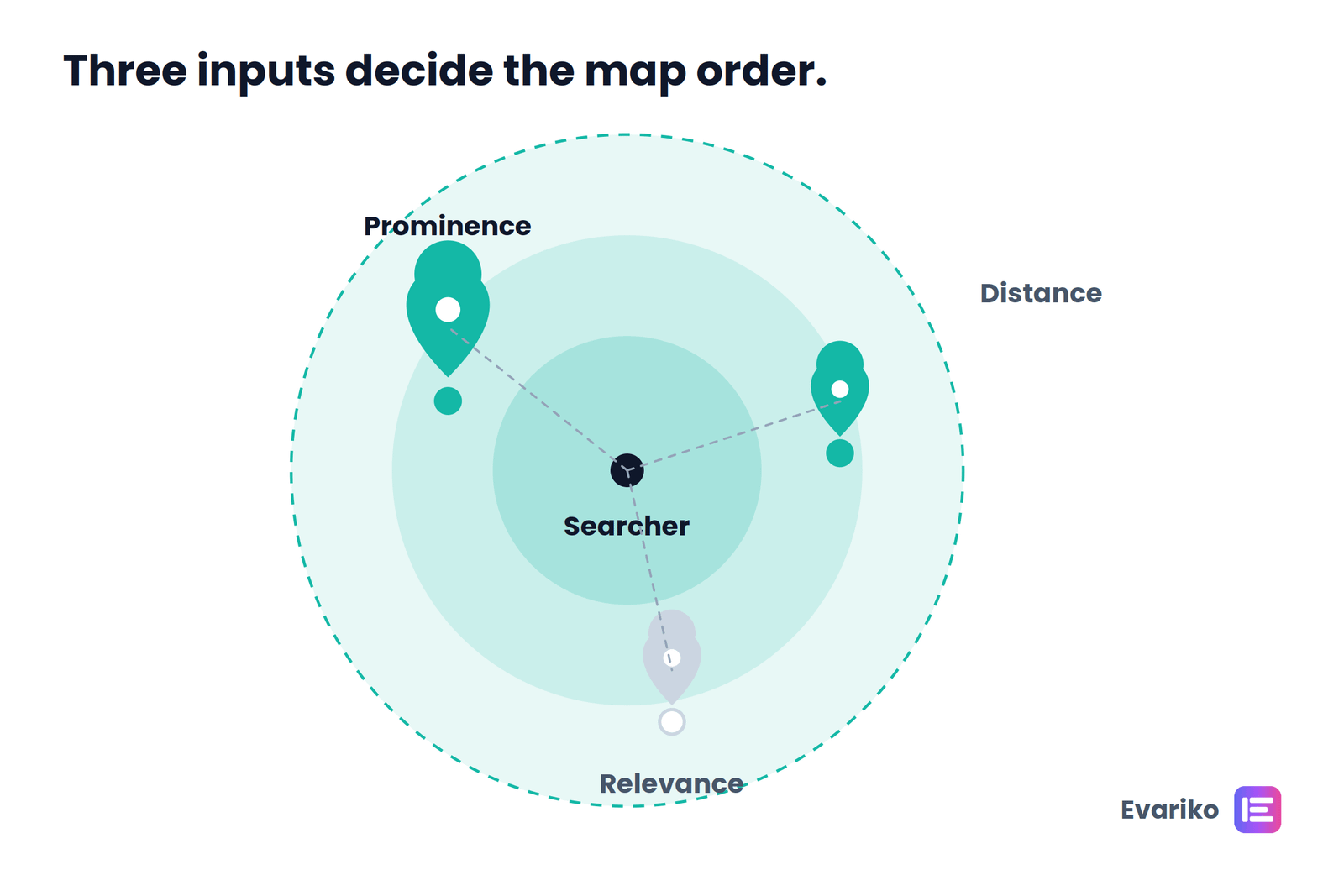
Distance is how far each business sits from the searcher. Prominence is how well known the business is, and Google states that review count and review score feed into it.
All three are published in Google’s own Business Profile documentation, which adds that there is no way to request or pay for a better local ranking. Setup order matters more than most people expect, and it is covered in Google Business Profile: Setup, Categories and Optimization Order.
Which Type of SEO Should You Do First?
Technical first, then on-page, then off-page, with local running alongside all three if you have premises or a service area.
The order is not a preference. Each area gates the next.
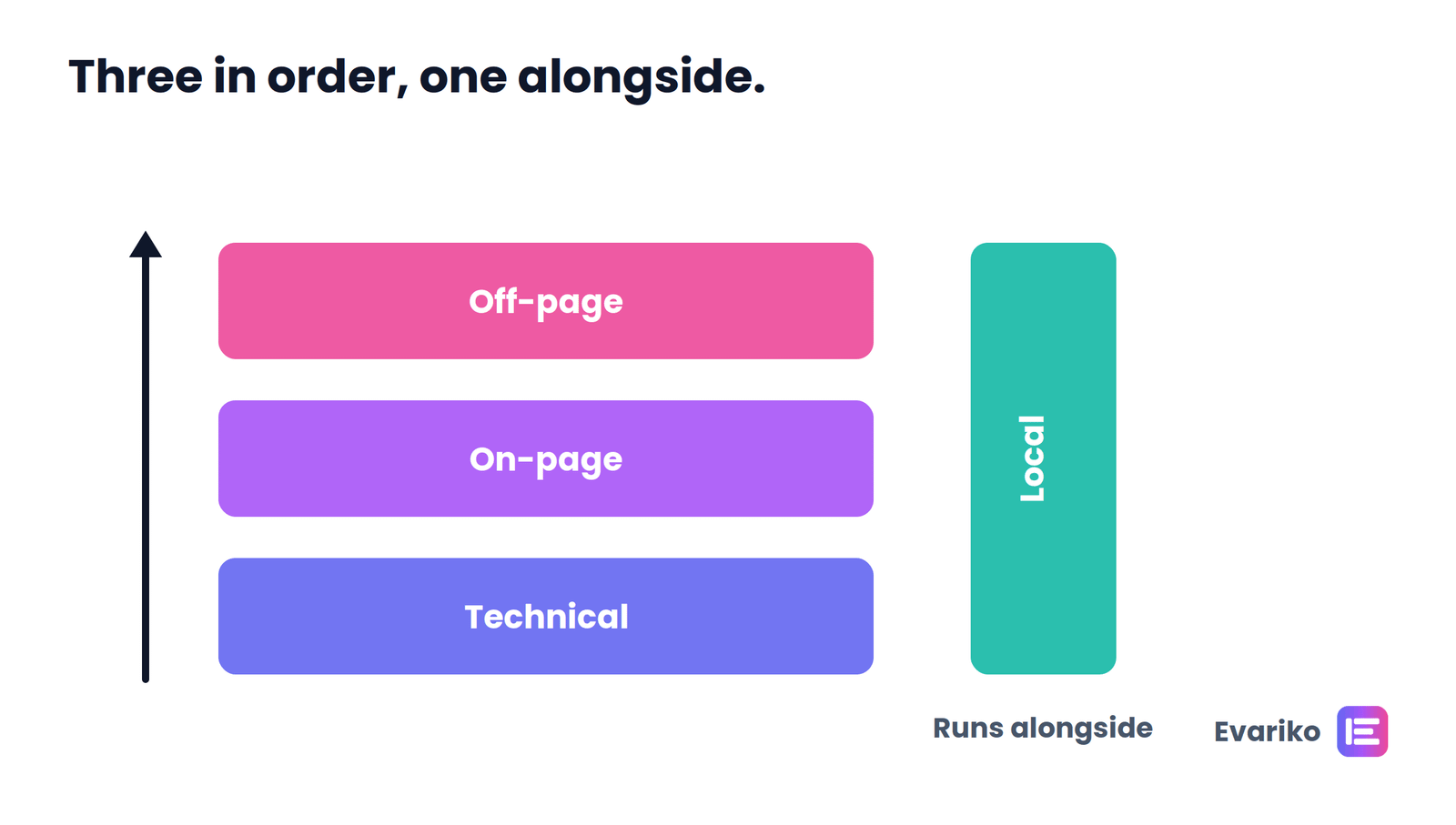
- Technical gates visibility. A page that cannot be crawled, rendered or indexed ranks for nothing, so nothing after this point counts until it is fixed.
- On-page sets eligibility. An indexed page competes only for queries its subject matches. This decides which races you are in.
- Off-page decides placement. Among indexed, relevant pages, corroboration decides the order.
- Local runs in parallel. The map has its own inputs, so profile work starts immediately.
Four questions put that order to work on a real site. Pages missing from the index? Fix technical. Pages indexed and matched to the wrong searches? Fix on-page. Pages relevant and stuck below competitors? Work on off-page. Serve a place and never appear in the map? Start local.
How the Four Types Work Together
The four compound, which is why doing them out of order wastes the work.
Three interactions explain most of the waste. Off-page authority spent on pages that are not indexable returns nothing.
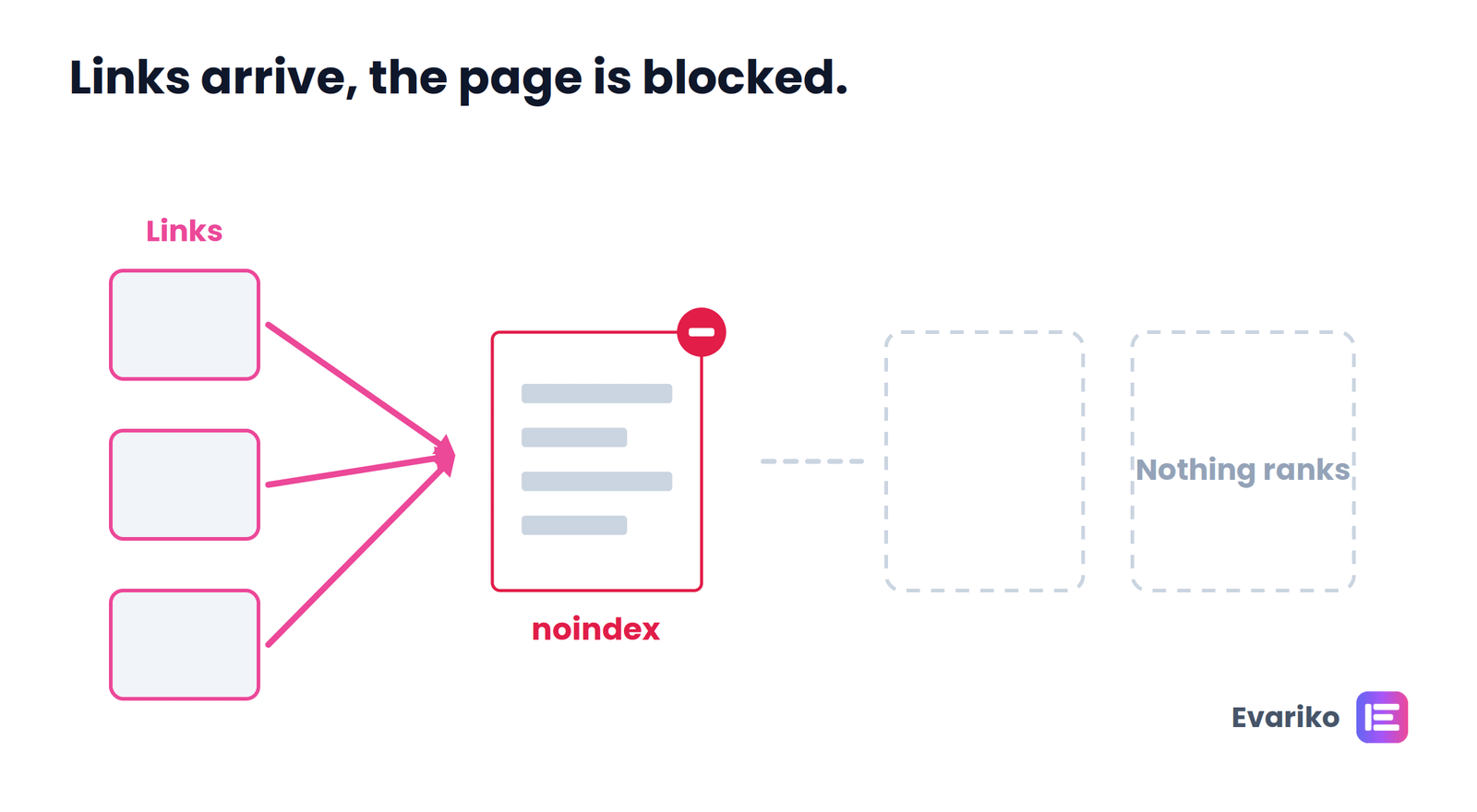
On-page relevance cannot overcome a rendering failure, so a well-written page a crawler never sees stays invisible. Local rankings depend on on-page and technical foundations plus a profile Google ultimately controls.
Take the plumbing company through all four.
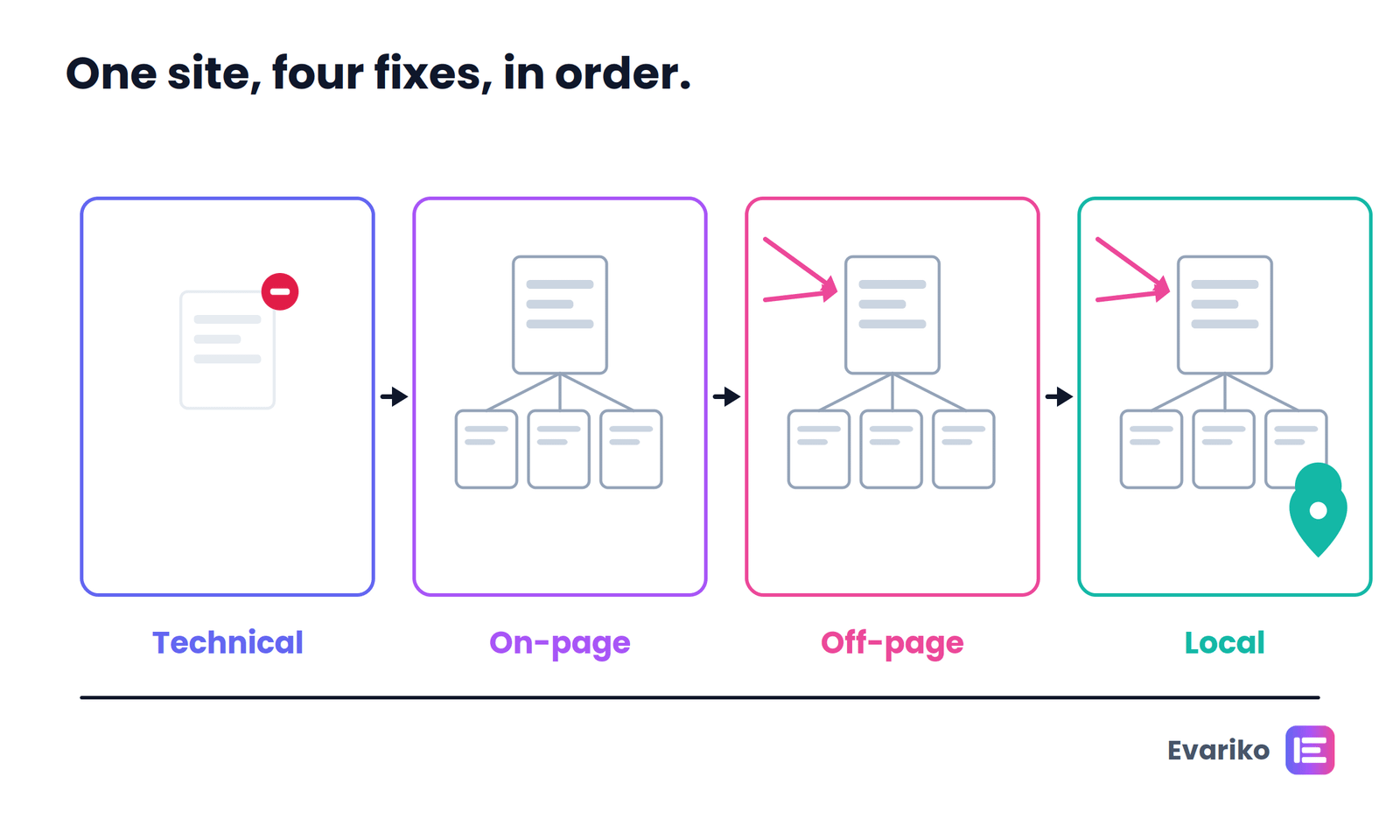
The inherited indexing setting is removed, so its service pages enter the index: technical. The single services page is split into boiler repair, bathroom installation and emergency callout: on-page. The sponsorship and the association listing now point at pages that exist and are indexed, so the credit lands somewhere: off-page. The profile is set as a service area, the number matches everywhere, and each town page supports both the profile and the ordinary results: local.
Run that sequence backwards and the sponsorship link points at a page Google never indexed. Same work, no result.
How Long Does Each Type Take to Show Results?
The four report back on different schedules, and the gap is wide enough to change what you fix first.
The table below gives the first signal you can actually observe for each area, what makes that signal arrive sooner or later, and where to look for it.
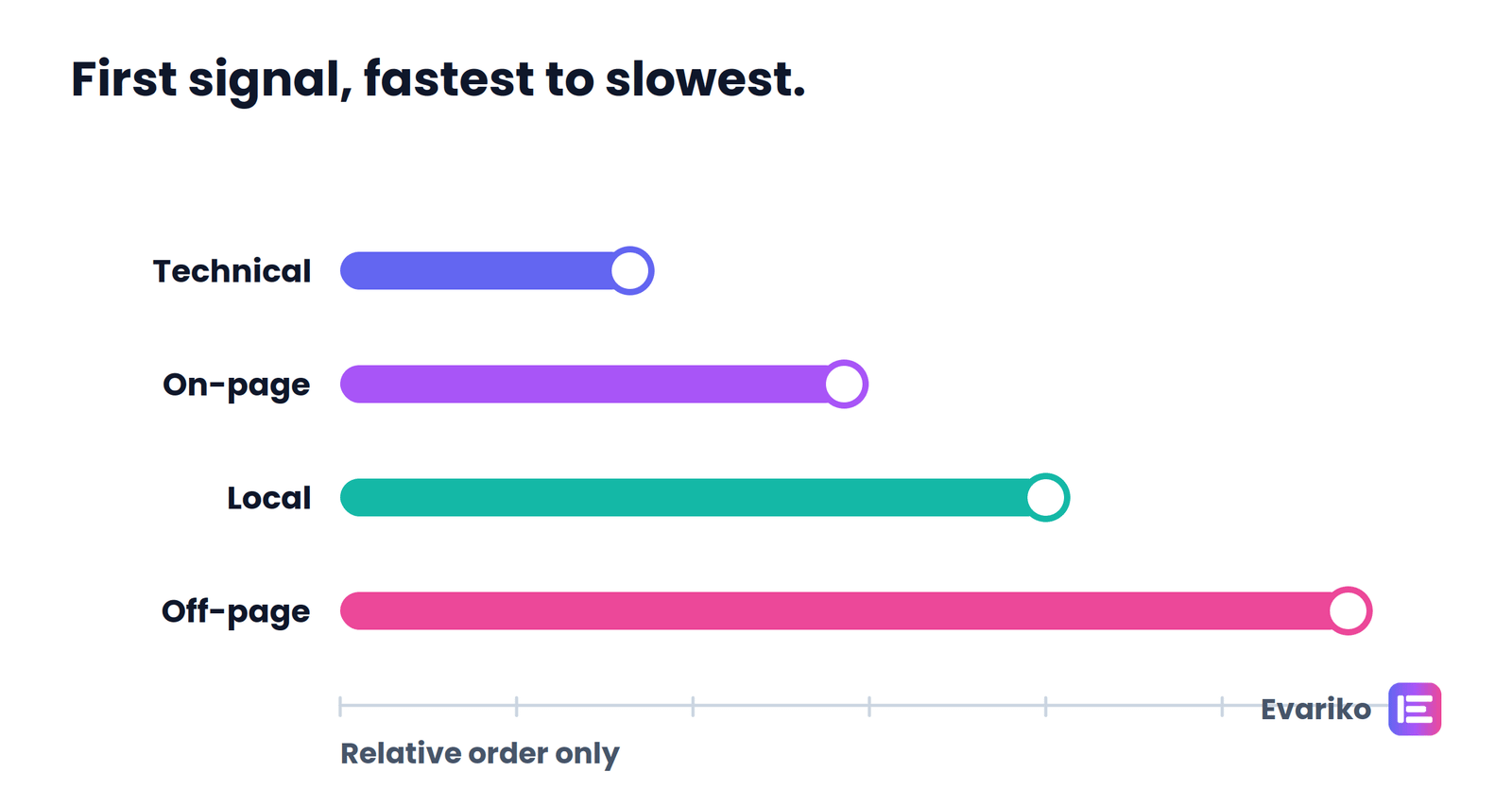
It gives mechanisms rather than day counts, because the number depends on your site rather than on the type of work.
| Type | First signal | What drives the variance | Where to check |
|---|---|---|---|
| Technical | The next crawl of the fixed pages | How often Google currently crawls the site | Search Console, Page indexing |
| On-page | Recrawl and reassessment of the changed pages | Whether the page was already competitive for that query | Search Console, Performance, by query |
| Off-page | Movement on the pages the references point at | Domain age and existing profile. A new domain with no links takes longer than an established one | Search Console, plus a backlink tool |
| Local | The profile updating, then movement across the area | Competitor density and distance from the searcher | Business Profile, plus grid rank tracking |
Technical reports fastest because the measurement is binary: the page is indexed or it is not. Off-page reports slowest because it waits on other people acting. The month-by-month view across a whole engagement is in How Long SEO Takes to Work and What Happens in Each Month.
Where AEO and GEO Fit
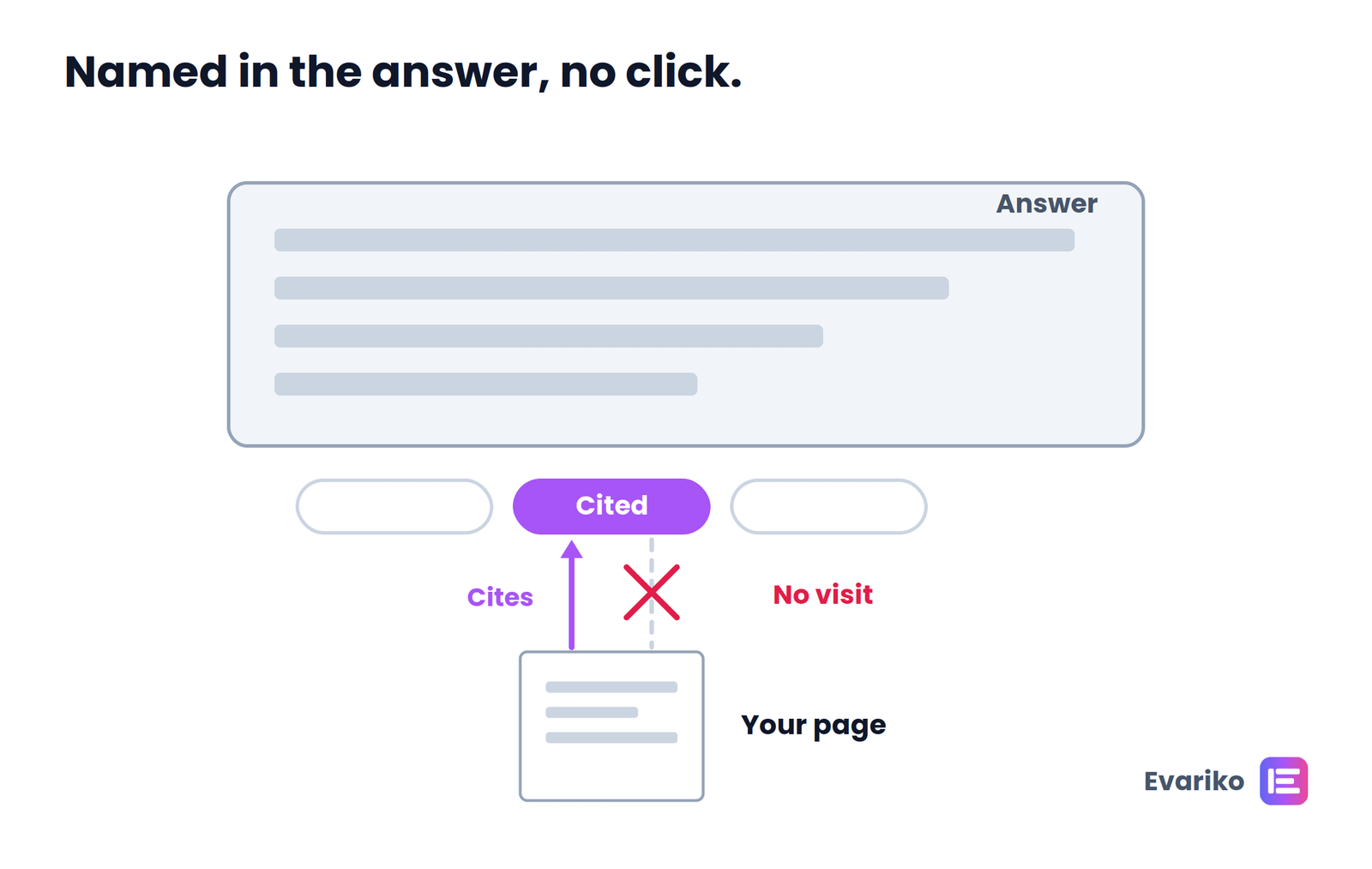
Answer engine optimisation and generative engine optimisation are not a fifth type. They are the same four areas aimed at a surface that cites rather than links.
The terms first. AI Overviews are the generated summaries Google places above ordinary results. AI Mode is the conversational search experience a user chooses to open. Answer engine optimisation is the work of being the source an assistant names. Generative engine optimisation is the same work aimed at generated answers across assistants rather than inside Google alone.
Google is direct about what this requires. Its guidance for site owners states there are no additional requirements to appear in AI Overviews or AI Mode, nor other special optimisations necessary. To be eligible as a supporting link, a page must be indexed and eligible to be shown with a snippet, meeting the same technical requirements as everything else. Google adds that you do not need to create new machine-readable files, AI text files or markup. Traffic from AI features arrives inside your overall Search Console search traffic.
So the continuity is real: same index, same crawl gates, same content quality.
Three things differ. The outcome is a citation rather than a click, so being named counts even when nobody visits.
Entity clarity matters more, because an assistant has to recognise what your organisation is before naming it. And third-party corroboration carries more weight, which is the off-page work above doing a second job. Google has described AI Mode as using query fan-out, breaking one question into subtopics and running several searches behind it, which rewards covering a subject completely.
If the surface you care about is Google, start with What Is Answer Engine Optimization and How It Differs From SEO. The wider version across assistants is What Is Generative Engine Optimization and Who It Applies To.
Do You Still Need Technical SEO on WordPress or Shopify?
Yes. Every platform handles part of technical SEO by default, and none of them handles all of it.
What changes is which part is already done and which failure you are most likely to hit.
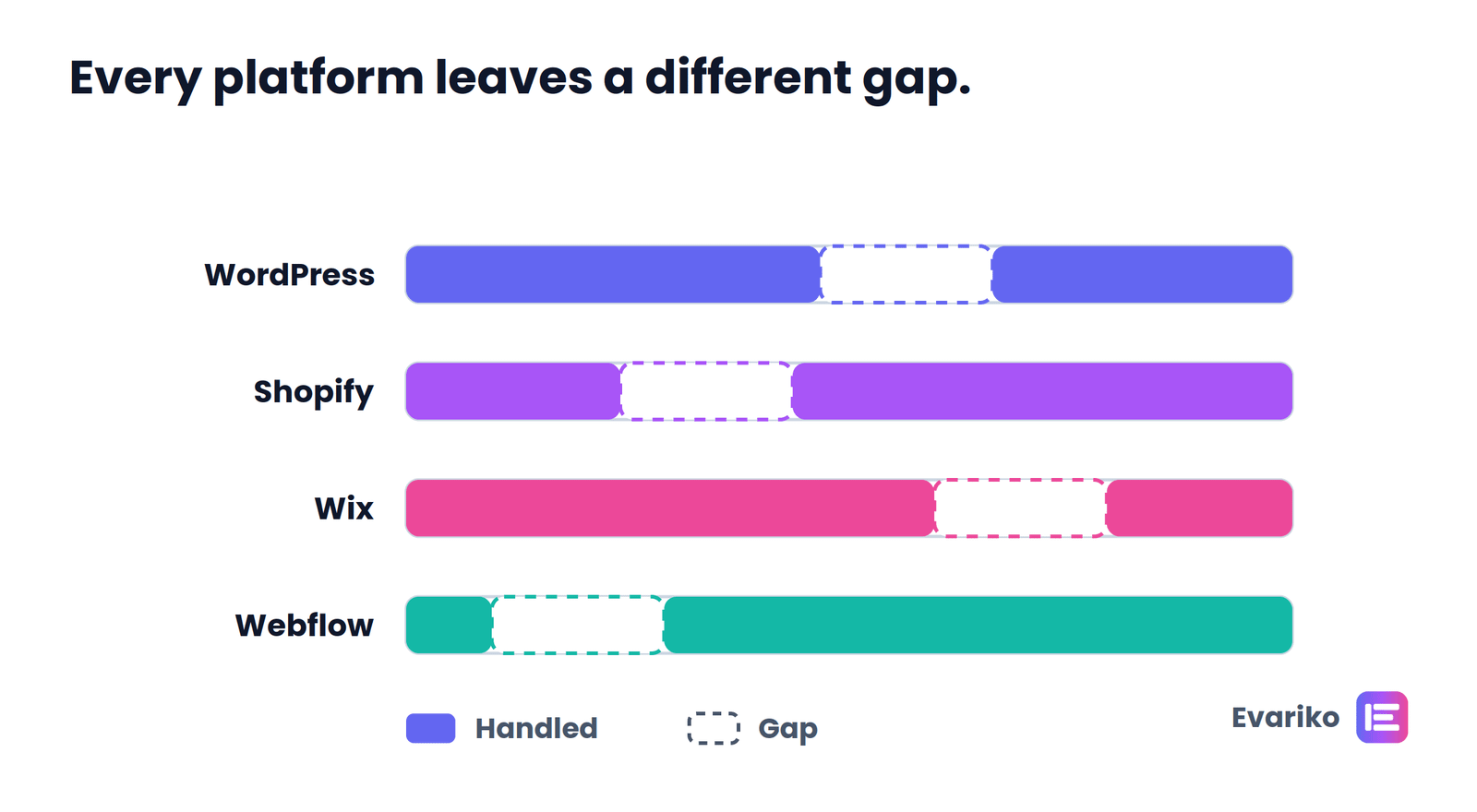
The table below covers four common builds, checked against current behaviour.
| Platform | Handled by default | Needs a plugin or app | Still manual | Common failure |
|---|---|---|---|---|
| WordPress | Sitemap at /wp-sitemap.xml since version 5.5, automatic robots.txt, clean permalinks, self-referencing canonicals, site-level indexing toggle | Meta descriptions and schema markup: core emits neither | Architecture, internal linking, speed, what the pages say | Two SEO plugins at once, printing duplicate titles, canonicals and sitemaps |
| Shopify | sitemap.xml and robots.txt generated automatically, canonical tags, HTTPS, product markup from the theme | Structured data beyond the theme’s output | Collection copy, internal linking, app weight | Collection-scoped product URLs: the theme links to /collections/x/products/y rather than the canonical /products/ address, so internal links point at duplicates |
| Wix | Sitemap updating as the site changes, self-referencing canonicals, server-rendered HTML, HTTPS, structured data presets for stores, blog, events, bookings | Custom JSON-LD beyond those presets | URL decisions, content, links | A hand-entered canonical can drop the page from the generated sitemap, and a changed blog slug creates no redirect |
| Webflow | Server-rendered HTML, robots.txt with the sitemap line added for you, per-page and per-collection-item title, description and slug fields | Schema via custom code embed, hreflang via Localization | Switching sitemap generation on, redirects, structure | Canonical tags are not emitted until you set the global canonical tag URL, so a default build has none |
Two patterns run across all four. Every platform gives you a sitemap and leaves site architecture to you. And every default is set for the average site rather than yours, which is why every failure above is a default nobody changed.
Which Types Does Your Business Not Need?
Three of the four apply to every site. The fourth and everything beyond it depend on what you sell and where.
- Local SEO is skippable if customers never come to you and you never travel to them. A software company selling to anyone with a card does not need a Business Profile to rank.
- International work, including hreflang, is skippable if you sell in one market in one language. With one version of a page there is nothing to tell search engines about versions.
- Ecommerce-specific work is skippable if you do not run a catalogue. Category structure, variants and feed optimisation have no equivalent on a service business site.
- Mobile, voice and social as separate projects are skippable for everyone, for the reasons in the last section below.
Every area you rule out is budget that goes to one of the three that always apply.
When Does Running This In-House Stop Making Sense?
It stops making sense when the number of areas that apply to you exceeds the number of people who can own them.
One person can run on-page work on a small site indefinitely. Technical work needs someone who can read a crawl report and change a template. Off-page work needs someone whose week includes talking to people outside the business. Local work needs the profile checked on a schedule. Four different habits, and most small teams sustain one or two.
The argument this guide has been making is also the reason these are rarely bought separately: the four are sequenced, interacting work rather than a menu. Evariko sells SEO, answer engine optimisation and generative engine optimisation as one engagement for that reason. The scope and the order are set out in SEO Services for Business Growth: Strategy, Cost and Results.
What Else Gets Called a Type of SEO
Three families of terms get filed as types of SEO and belong somewhere else.
White Hat and Black Hat Classify Something Else
White hat and black hat are not types of SEO. They describe how you work, not what you work on.
White hat describes work that stays inside Google’s published policies. Black hat describes work that breaks them: buying links, hiding text, cloaking, spinning content. Grey hat labels whatever someone would rather not defend.
That is a different question from “what areas of work exist”, and the lists do not merge.
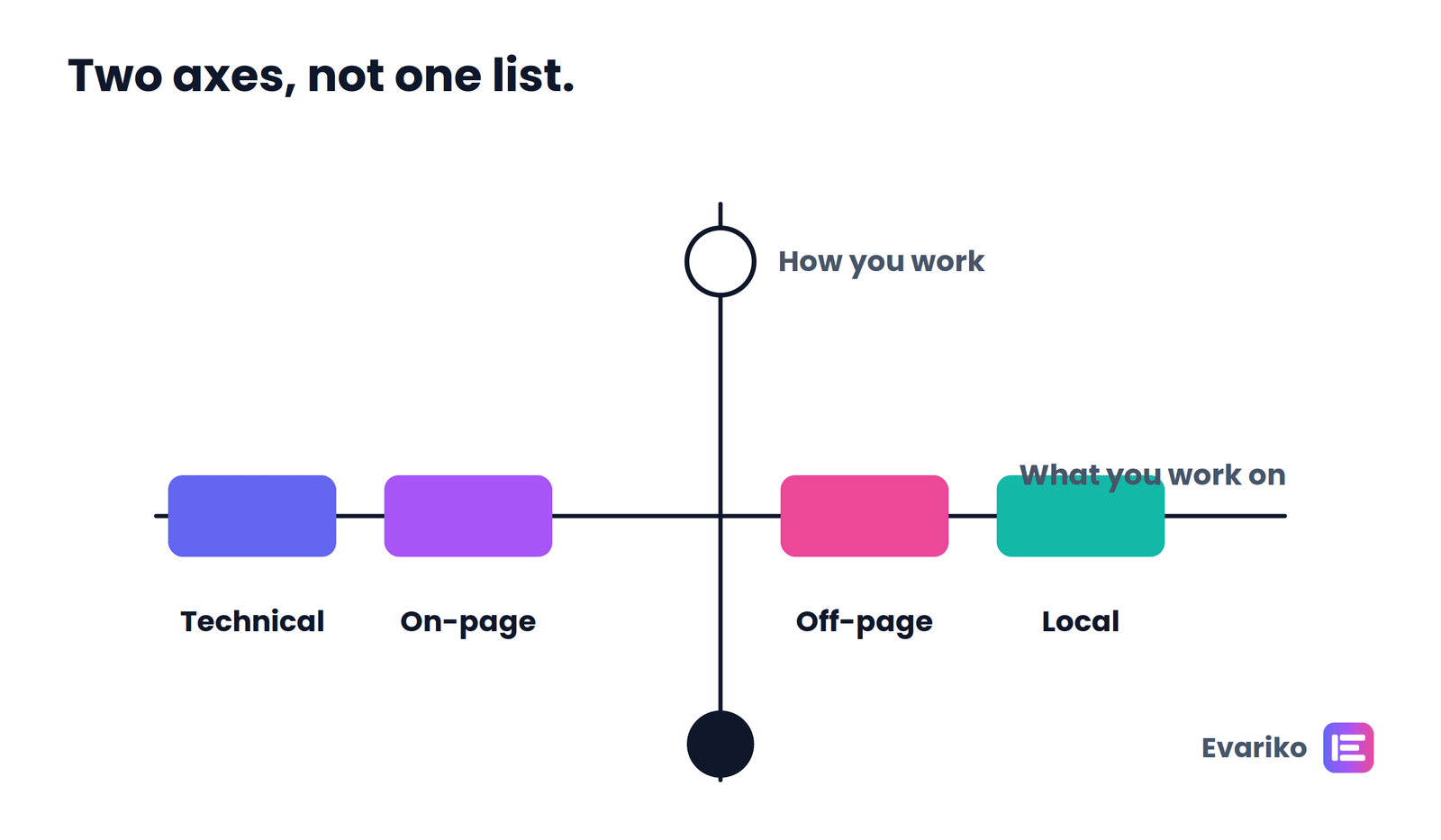
You can do on-page SEO in a way Google penalises or a way it rewards. The functional area is the same either way.
Negative SEO is the term most often misfiled. It is an attack performed on a site by a third party, usually through spam links or scraped duplicate content. Nobody practises it on their own site, so it does not belong on a list of things you might choose to do. The real risks are covered in Black Hat SEO Tactics, Their Risks and What Google Penalises.
The Types That Stopped Being Separate
Three categories you will still see listed stopped being separate, each for a different reason.
Mobile SEO folded into technical SEO once mobile-first indexing finished, because Google indexes the mobile version of your page as the version. There is no desktop site to optimise separately.
Voice SEO folded into search intent. Voice is an input method, and a question asked out loud is served by the same page as one typed. What changes is phrasing, which is a search intent question rather than a new area of work.
Social SEO folded into off-page SEO, for the reason in the last question below.
Ecommerce and International SEO Are Contexts
Ecommerce SEO and international SEO are contexts in which the four areas get applied, not additional areas.
Running a catalogue changes what the four have to handle: duplicate product URLs, filtered category pages, variants and out-of-stock items are technical and on-page problems with a retail shape. That is the subject of What Is Ecommerce SEO and How It Differs From Content-Led SEO.
Selling across markets changes it differently. Hreflang annotations tell Google which language or regional version belongs to which audience, and each version has to list itself and every other version to be read.
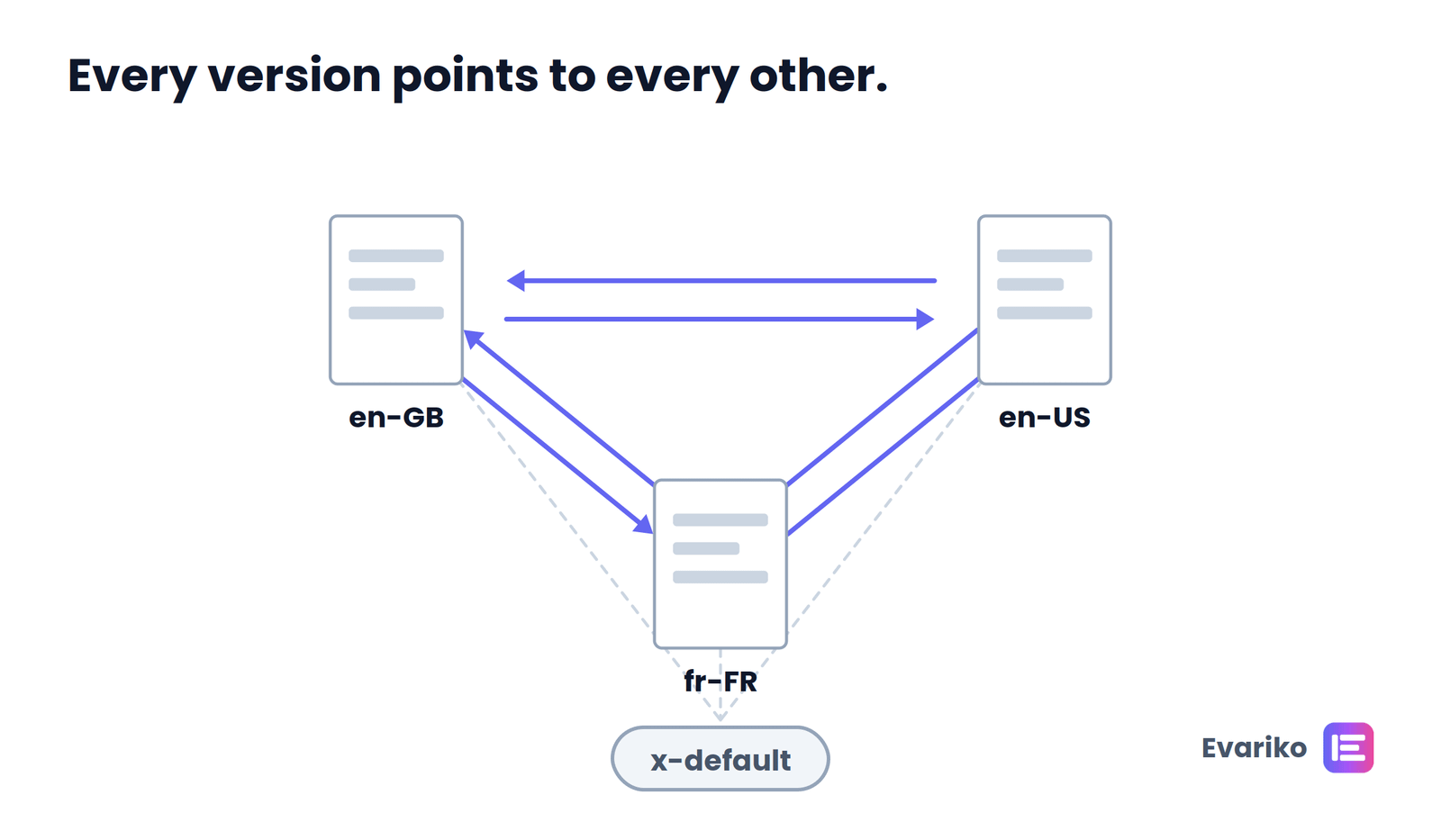
Two details catch people out: an x-default entry covers users no other version matches, and Google determines a page’s language algorithmically rather than from hreflang. Implementation sits in Hreflang Implementation for Multi-Country and Multi-Language Sites.
Enterprise SEO is scale rather than kind: the same four areas, with more stakeholders between the decision and the change.
Is content SEO a separate type?
No. Content SEO sits mostly inside on-page SEO, describing the same work from the writing end. One part of it does sit above the four: deciding which pages should exist and how they connect, so a site covers a subject rather than scattering posts across it. That is a planning layer, and it starts with Search Intent Types and How to Match Page Format to Each.
Do social signals affect rankings?
Not directly. Shares and follower counts are not ranking inputs. What social activity does is put content in front of people who then link to it, mention the business, or search for it by name, and those are off-page signals that count.